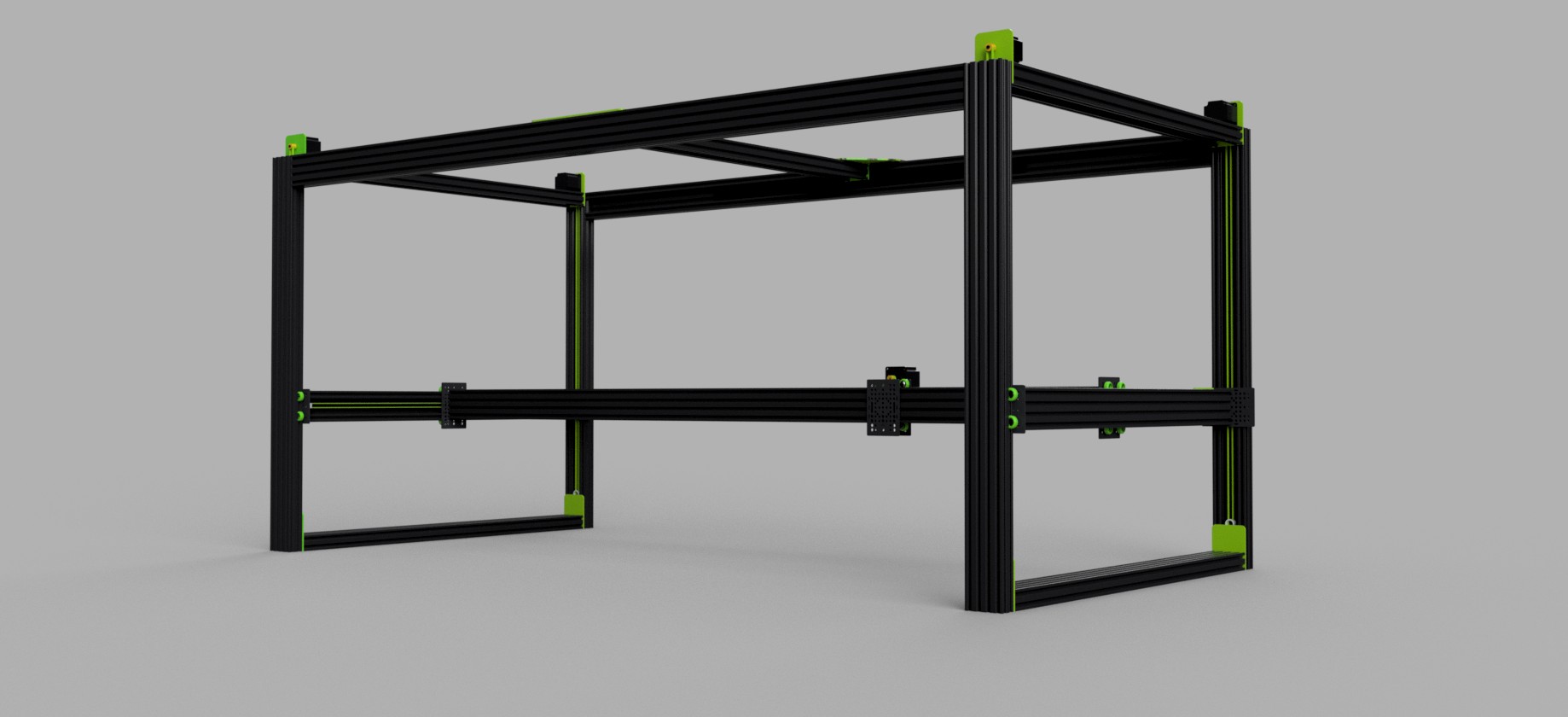
A pallet-scale concrete/paste-printer development design based on a scaled Cartesian dual-Y belt-pinion architecture with quad-Z self-tramming. The published concept uses a lightweight printhead (~1.5 kg) and V-groove motion system. Dust, weather, duty-cycle, guarding, electrical, and field performance require independent validation. BOM prices are planning references, not a guaranteed build cost.
The concrete 3D printing industry moves faster when hardware isn't a barrier. M3-CRETE is released openly so researchers, universities, and contractors can inspect, modify, and improve a published CAD/BOM development baseline. Any build or material selection requires the builder's own safety review and validation.
CEMFORGE can organize material evidence and identify gaps for controlled research planning. It does not supply a production-approved M3-CRETE mix, and modeled outputs do not establish pumpability, printability, buildability, strength, durability, structural adequacy, or field suitability. Actual materials, equipment, and conditions require independent laboratory and project review.
The project is in active development. CAD files and BOM are published, with build guides and documentation added to the GitHub repository as they are reviewed. Publication does not mean a design has been certified or field-validated. Watch the repository, open an issue, or start a discussion for design feedback, build reports, or technical questions.
M3-CRETE is not a casual hobby kit, finished certified printer, or jobsite-ready electrical product. It is intended for qualified technical users, R&D labs, supervised institutional programs, and experienced builders. Any AC mains wiring, control-box integration, grounding, disconnects, emergency-stop power circuits, facility connection, inspection, or code compliance work must be performed by qualified personnel, a licensed electrician where required, or a qualified control-panel shop. Public project files identify interfaces and components; they are not AC mains wiring instructions.